______________________________
 ____________________________


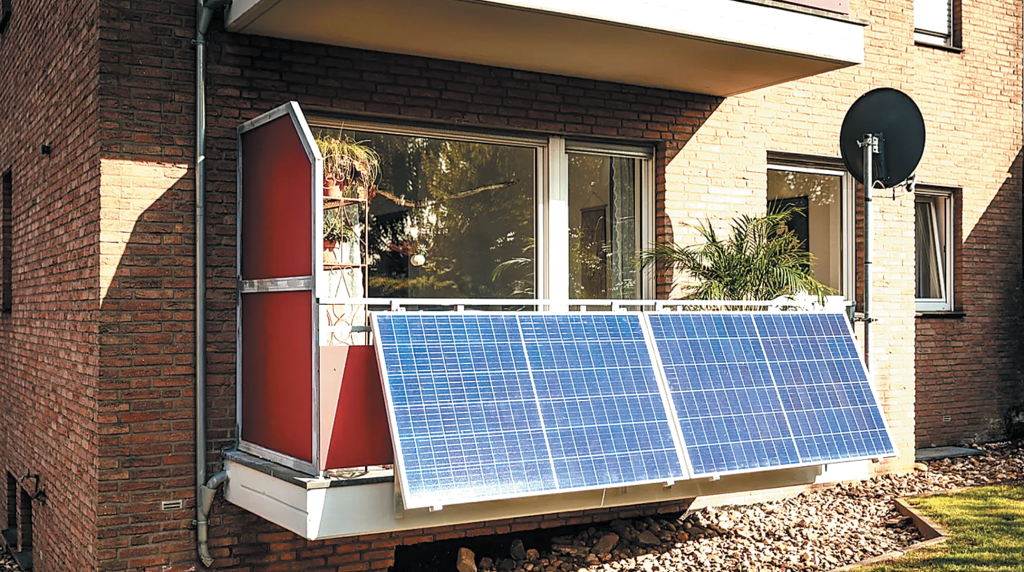
BALCONY SOLAR: Small plug-in solar systems can be mounted on apartment or condominium balconies, allowing renters and owners without rooftop access to generate electricity and reduce their utility bills.
September 1, 2026
By Brian Hews
California renters and condominium residents who have largely been left out of the rooftop solar boom could soon have new ways to generate cheaper electricity.
State lawmakers have approved two bills designed to expand small-scale solar beyond traditional rooftop systems, including one that would allow Californians to plug small solar panels directly into household electrical outlets.
Assembly Bill 1813 would require the California Public Utilities Commission to develop a more robust community solar program. Under the concept, residents could subscribe to a nearby solar installation and receive savings on their monthly electric bills without installing panels on their own homes.
The second measure, Senate Bill 868 by Sen. Scott Wiener (D-San Francisco), would legalize what is commonly called “balcony solar.”
The systems use relatively small solar panels that can be placed on a balcony, patio or fence and connected directly to a wall outlet. Unlike a traditional rooftop installation, they would not require homeowners to install a large array or go through the usual utility approval process.
That could make solar available to millions of Californians who rent apartments or live in condominiums.
Both bills now head to Gov. Gavin Newsom.
Utilities Push Back
California’s investor-owned utilities have opposed portions of both proposals, arguing that expanding solar subsidies could shift costs to customers who do not participate.
Pacific Gas & Electric successfully pushed for a 2030 expiration date in SB 868. If Newsom signs the measure, lawmakers would have to reauthorize the plug-in solar program before then.
PG&E also raised concerns about safety standards for plug-in systems.
Under the legislation, balcony solar systems could not be used until they have been certified for the U.S. market by a nationally recognized testing laboratory such as UL Solutions. Similar systems are already widely used in Germany.
The larger fight surrounds community solar.
AB 1813 would require utilities to compensate community solar developers and participating customers at rates higher than those established under the CPUC’s existing program.
Utilities contend those payments ultimately would be borne by other customers.
The CPUC’s independent Public Advocates Office estimated AB 1813 could shift approximately $1.5 billion annually to customers who don’t participate in community solar — averaging roughly $12 per month.
Southern California Edison has also opposed the legislation, arguing it could expose customers to higher rates when less expensive sources of clean electricity are available.
Solar Advocates Disagree
Ward and solar advocates dispute the utilities’ cost-shift argument.
Supporters point to studies indicating that greater use of community solar combined with battery storage could reduce demand for natural-gas generation, imported electricity and expensive transmission infrastructure.
One study cited by Ward estimated that adding 5.4 gigawatts of community solar and storage could produce approximately $6.5 billion in savings for California ratepayers.
The debate comes after California dramatically changed the economics of traditional rooftop solar.
Installation rates dropped following a CPUC decision reducing the amount utilities pay many homeowners for excess electricity generated by their rooftop systems. Utilities argued the previous compensation system left customers without solar paying a disproportionate share of maintaining the electrical grid.
Community solar supporters have spent several years trying to persuade the CPUC to establish a program that makes smaller projects economically viable while extending solar benefits to people who don’t own a roof.
Your Balcony Could Become a Tiny Power Plant
Of the two proposals, plug-in solar would represent perhaps the most visible change for consumers.
Instead of financing a large rooftop installation, a renter could potentially place several approved panels on a sunny balcony or patio, connect the equipment to an outlet and use the electricity to offset some of the power being purchased from the utility.
The concept has become increasingly popular in Germany but remains relatively new in the United States.
Wiener said the legislation is part of a broader effort to give consumers alternatives to relying entirely on California’s large utilities.
“We should empower people to generate their own electricity and to lower their electric bills,” he said.
Lawmakers also approved Senate Bill 913, which would allow consumer-owned batteries, electric vehicles, smart thermostats and similar devices to be combined into larger groups and treated as a source of electricity available to California’s grid.
Together, the measures represent an effort to move some electricity generation away from large centralized power plants and onto balconies, patios, batteries — and potentially into the hands of Californians who previously had no practical way to participate in solar power.

Subscribe to get the latest posts sent to your email.