______________________________
 ____________________________


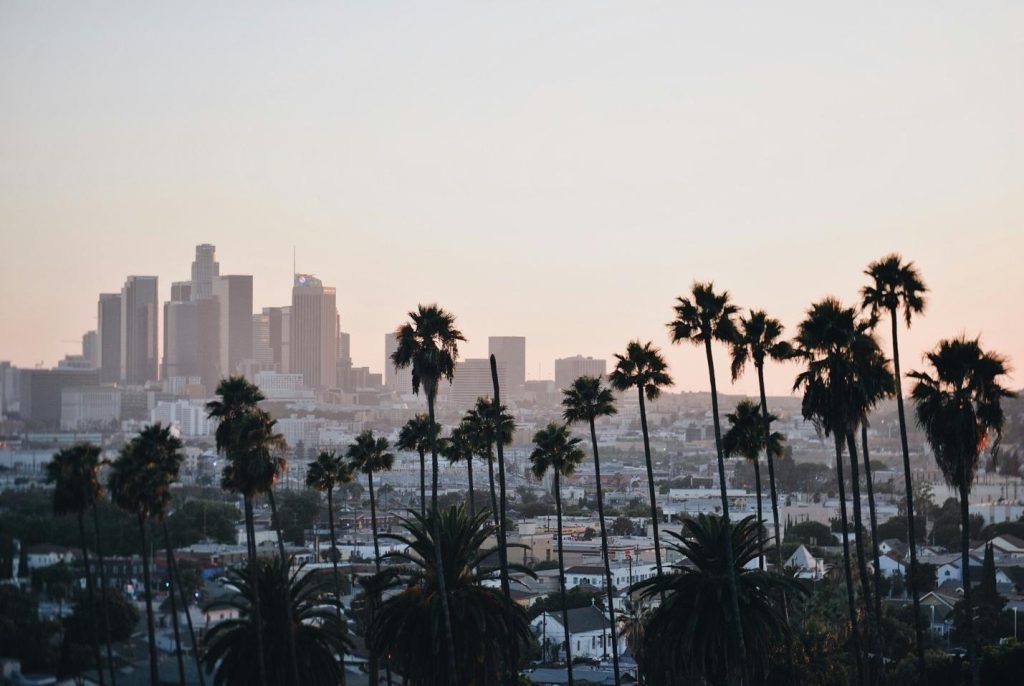
Los Angeles has long enjoyed a reputation as a place where architects can experiment. From futuristic roadside structures to radical private homes and monumental cultural institutions, the city has repeatedly embraced buildings that challenge conventional forms. The Los Angeles County Museum of Art (LACMA) provides a contemporary example. Its new David Geffen Galleries, designed by Peter Zumthor, use an unconventional flowing form that stretches across Wilshire Boulevard, continuing LA’s tradition of ambitious architectural experimentation.
Curves have played a particularly important role in this story. Long before today’s sweeping glass towers, Los Angeles architects were using rounded corners and curved windows to communicate ideas about speed, technology, modernity, and the future.
The 1930s: Streamline Moderne Comes to Los Angeles
Curved windows became especially prominent with the arrival of Streamline Moderne during the 1930s. Emerging from Art Deco, the style rejected excessive ornament in favor of smooth surfaces, horizontal lines, rounded corners, and aerodynamic shapes.
The style was particularly suited to Southern California. Los Angeles was becoming increasingly shaped by automobiles, while designers were fascinated by the sleek appearance of airplanes, trains, automobiles, and ocean liners. Buildings began adopting forms associated with these new modes of transportation.
Windows were essential to achieving the effect. Instead of interrupting a façade with conventional rectangular openings, architects could use horizontal window bands and glazing that wrapped around corners. The result made stationary buildings appear streamlined and dynamic.
Curved Windows as Symbols of Progress
In the early twentieth century, curves represented much more than an aesthetic choice. Aerodynamic forms were closely associated with technological progress.
A rounded building with long horizontal windows could resemble the observation deck of an ocean liner or the smooth body of a modern vehicle. Curved corner windows strengthened this association by removing the hard visual break created by conventional building corners.
Los Angeles proved an ideal setting for these ideas. Architecture was increasingly viewed from moving automobiles rather than exclusively by pedestrians, encouraging architects to create bold silhouettes that could capture attention from the road.
Custom Curved Glass Expands the Possibilities
Manufacturing curved architectural glass was once a demanding process that placed significant restrictions on architects. Modern custom fabrication provides far greater flexibility in the size, radius, thickness, finish, and performance of curved glazing.
This flexibility is valuable for new construction, but it is equally important for restoration. Custom curved windows can be manufactured to accommodate the delicate profiles of a Victorian-era curved window or replicate the iconic curves of an Art Deco masterpiece. This allows damaged or outdated glazing to be replaced while respecting the architectural character of historic buildings.
At the other end of the spectrum, architects can specify large curved insulated or laminated panels for contemporary façades. The same fundamental material can therefore help preserve LA’s architectural history while enabling entirely new forms.
Gerry Building: Curves Take Over the Façade
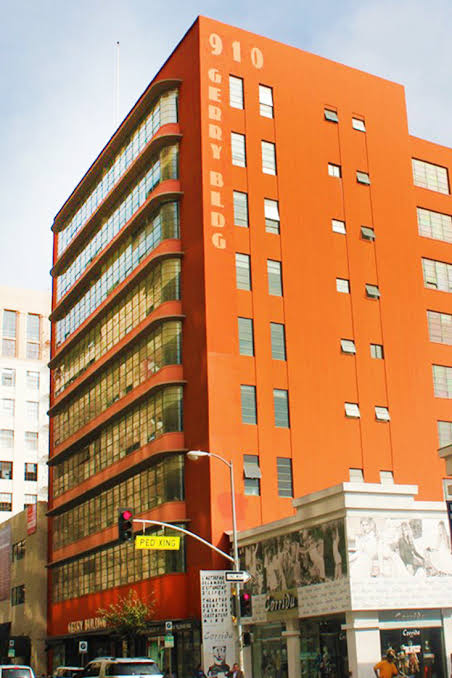
Completed in 1947, the Gerry Building in Downtown Los Angeles demonstrates how curved windows survived beyond Streamline Moderne and entered the postwar period.
Designed by architect Claudius E. Miller, the building is particularly recognizable for the eight projecting tiers of curved windows running across its façade. Rather than functioning as minor decorative details, the windows largely define the building’s appearance.
The glazing gives the façade depth and rhythm while demonstrating how curves could be incorporated into a substantial commercial structure. The building also reflects Downtown LA’s importance to the postwar garment industry, combining practical commercial architecture with a distinctive visual identity.
Century Plaza Hotel: Mid-Century Curves Meet Luxury
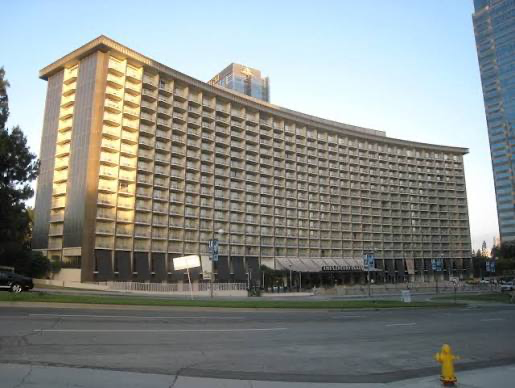
By the 1960s, curved architecture had become compatible with a very different vision of Los Angeles: glamorous, modern, and internationally ambitious.
The Century Plaza Hotel, designed by famed architect Minoru Yamasaki, opened in 1966 and became one of Century City’s defining buildings. Its long, crescent-shaped form gives the hotel an unmistakable profile, with repeating windows and balconies following the sweep of the structure.
The curve creates a softer alternative to the conventional rectangular hotel block while giving rooms different perspectives across the surrounding city. Here, curved architecture was no longer primarily about evoking automobiles and ocean liners. Instead, it became associated with the elegance and sophistication of Mid-Century Modern design.
777 Tower: Curves Enter the Glass Skyscraper
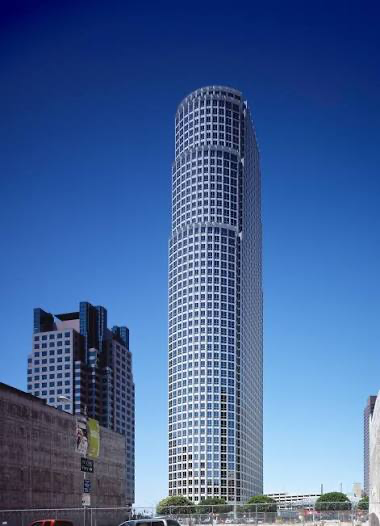
The evolution continued with 777 Tower, designed by César Pelli and completed in 1990.
The 53-story Downtown Los Angeles skyscraper uses bowed east and west elevations rather than presenting conventional flat façades. Rows of windows follow these gentle curves, while vertical elements emphasize the building’s height.
The result translates LA’s long fascination with curved windows into the language of the modern office tower. What had appeared as wraparound glazing on smaller Streamline Moderne buildings could now influence the profile of a skyscraper.
Where Does LA’s Curved Glass Go Next?
Los Angeles’ relationship with curved windows has lasted because the technology continues to evolve alongside architectural tastes. Today’s manufacturers can combine customized curves with laminated construction, insulated glazing, solar-control coatings, and other performance technologies.
That opens possibilities for buildings that are more ambitious in both appearance and function. Curved glass could help architects create façades that respond to California’s sunlight, frame panoramic views, restore historic landmarks, and produce increasingly fluid connections between interiors and the outdoors.
From the streamlined windows of the 1930s to bowed glass skyscrapers, curves have repeatedly helped Los Angeles express its fascination with what comes next. As glass technology advances, that century-long architectural love affair shows little sign of straightening out.

Subscribe to get the latest posts sent to your email.