____________________________

 ____________________________

By Brian Hews
Publisher | Follow X
June 8, 2026
The Santa Ynez Valley has changed.
That was my first thought as my wife Cora and I rolled into Solvang recently, passing vineyards, oak trees, and rolling hills that looked familiar yet somehow different than I remembered.
My brother Ed lived in Solvang from 1979 until 2002, and during those years I made countless trips up Highway 101. Back then, Cora was my girlfriend, not yet my wife of 37 years. We would visit Ed, wander Solvang’s Danish-inspired streets, explore the valley, and enjoy the slower pace of life that seemed worlds away from Los Angeles.
In those days, Solvang was primarily known for bakeries, windmills, and tourists carrying boxes of pastries back to their cars. Los Olivos was a quiet stop along the way, a charming little town where ranchers, farmers, and wine enthusiasts crossed paths.
Today, the valley feels different.
The wine industry has matured. The culinary scene has exploded. Los Olivos has evolved from a place travelers passed through into a destination they seek out. The crowds are younger, the food scene more sophisticated, and the energy noticeably different than I remember from those trips decades ago.
Yet somehow the valley hasn’t lost its soul.
The oak trees still line the roads. The vineyards still stretch toward the horizon. The pace remains relaxed. The scenery remains spectacular. The region has simply added another dimension to what already made it special.
As it happens in life, a few days before our trip, I happened to catch an NBC California Live segment featuring Los Olivos’ Bar Le Côte and Chef Brad Mathews. By the time the segment ended, I was texting links to Cora and making sure the restaurant was on our itinerary. Sometimes television sells a destination. This time it sold lunch.
Located on Alamo Pintado Ave. in downtown Los Olivos, Bar Le Côte has become one of California’s most talked-about dining destinations since opening in 2021. What makes its success even more remarkable is that Chef Mathews has built a nationally recognized seafood restaurant in the middle of wine country.
After checking into our hotel and spending part of the afternoon wandering through Los Olivos’ oak-shaded streets, peeking into tasting rooms and watching visitors stroll between shops with wine glasses in hand, it was finally time for lunch. We parked the car, walked down Grand Avenue, and headed toward the restaurant that had prompted an impromptu addition to our itinerary just days earlier.
Like many couples who have been married for nearly four decades, Cora and I have developed a reliable dining strategy. We order different dishes, share everything, and spend the meal negotiating over who gets the last bite.
At Bar Le Côte, that approach paid off handsomely. We started with the Peruvian scallops, paired with pixie tangerine and mint. The bright citrus and fresh herbs amplified the natural sweetness of the scallops without overwhelming them. It was the kind of opening dish that immediately tells you the kitchen knows exactly what it’s doing.
______________________
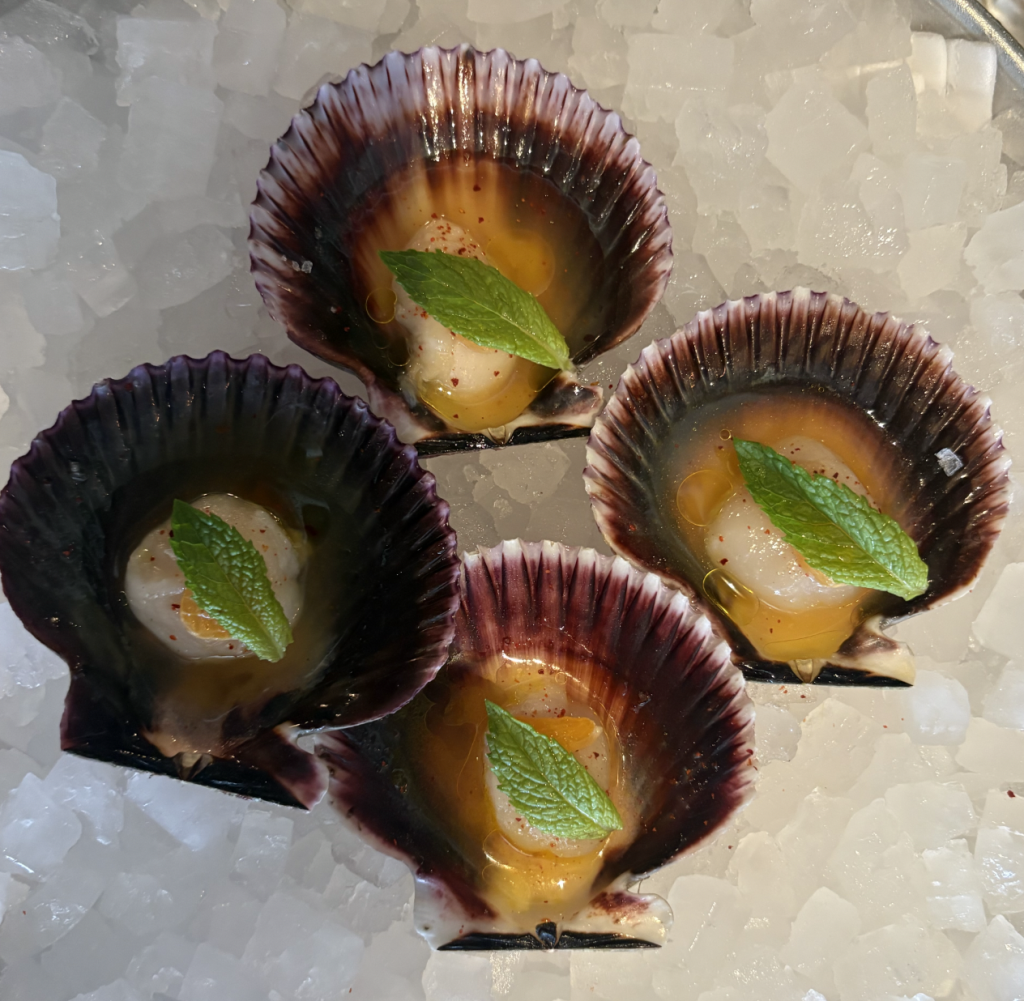
The Peruvian scallops, paired with pixie tangerine and mint.
______________________
Next came the c creating a balance of richness, acidity, and texture that was divine. For those unfamiliar with pluots, they’re a California-developed cross between a plum and an apricot, and their subtle sweetness paired beautifully with the fish.
___________
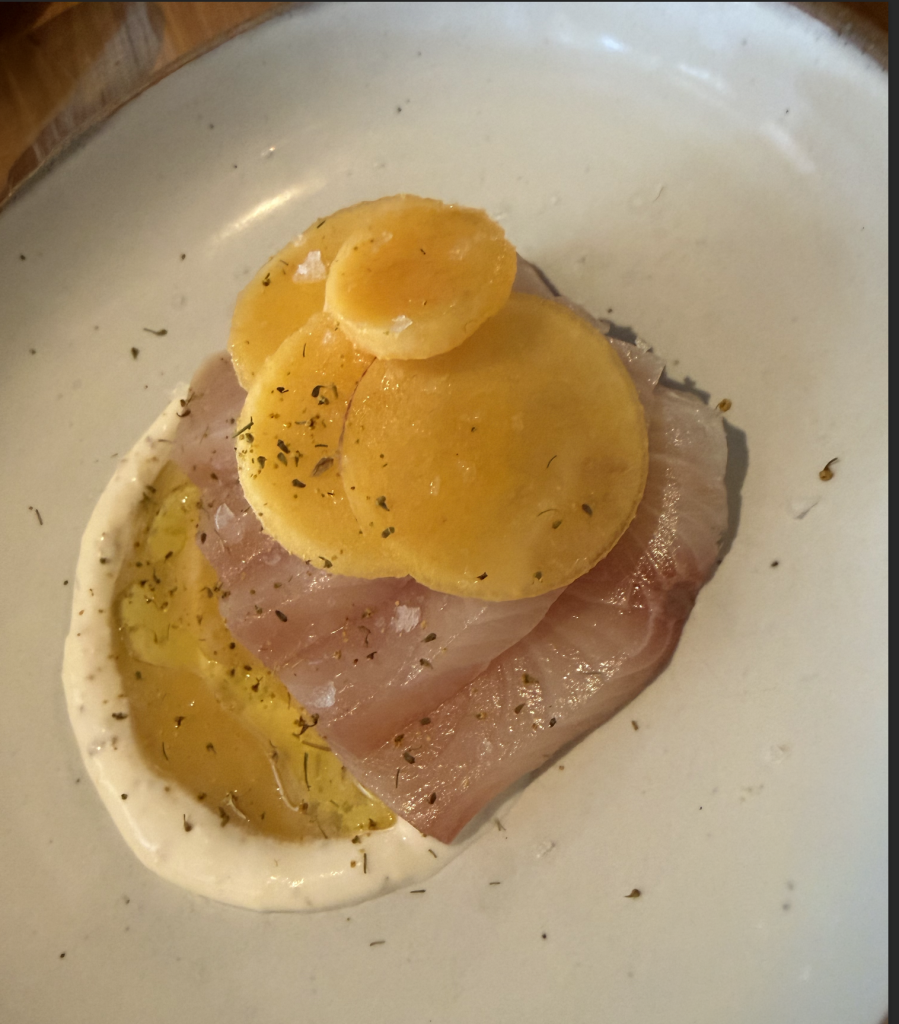
The Yellowtail Crudo. Delicate slices of fish were layered with pickled fennel, pluot, and crème fraîche.
________________________
The pan con tomate followed. On paper it sounds simple—tomato on bread. In reality, it was anything but. Delicate grated farm-fresh tomatoes with a splash of sherry that you spoon onto rosemary and saffron focaccia baked that day at the restaurant delivered the kind of flavor that reminds diners why simple dishes are often the hardest to perfect.
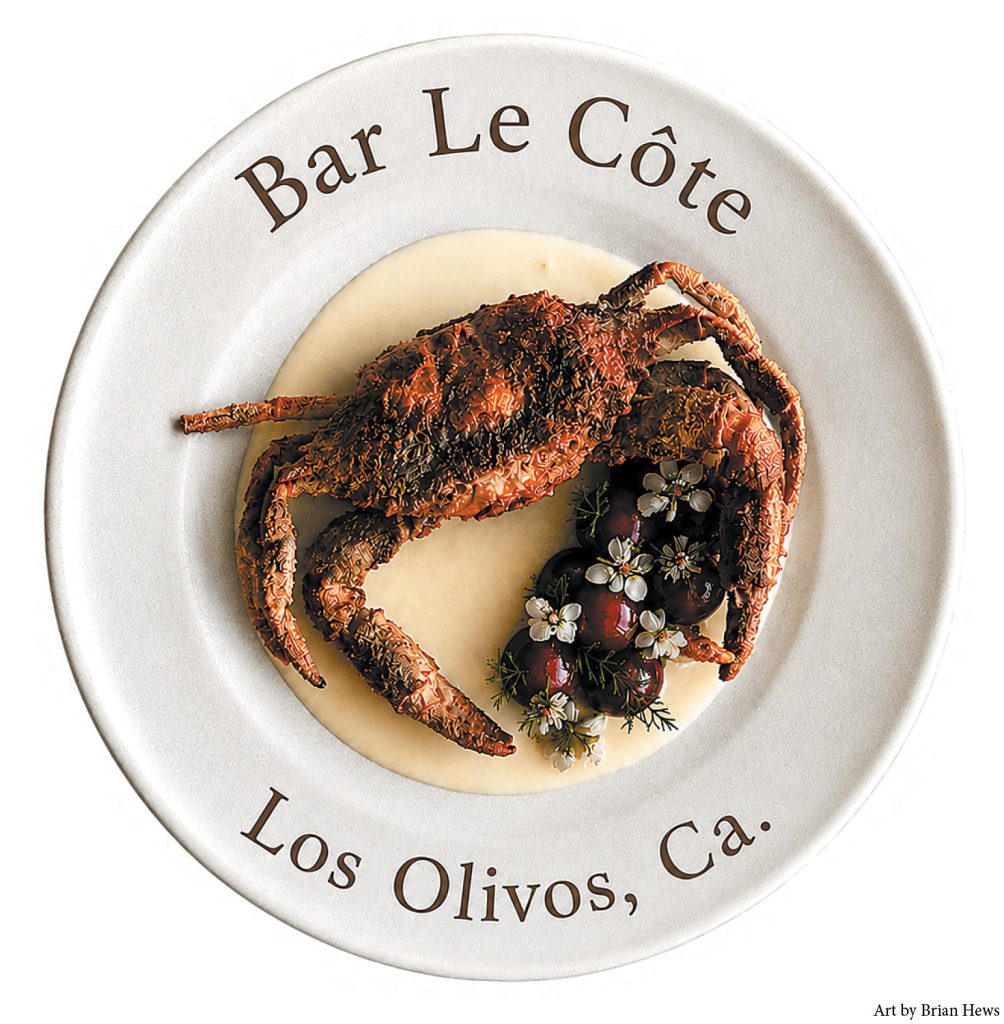
Then came the showstopper. (Cover photo.)
The Maryland soft-shell crab arrived atop white gazpacho, accompanied by pickled local cherries and flowering cilantro. It was one of those dishes that makes conversation stop for a moment. The sweetness and acidity from the cherries played beautifully against the crab, while the chilled gazpacho tied everything together. The combination sounded unusual when we first read it on the menu. After one bite, it felt inspired.
Weeks from now, I’ll probably still be thinking about those pickled cherries.
The dish was made even more special because soft-shell crab season is brief. The crabs are harvested only during the short period when they naturally shed their shells, making them one of the seafood world’s most anticipated seasonal delicacies. When the season ends, so does the dish.
By the end of the meal, Cora and I agreed on one thing: every dish seemed better than the one before it. Then the crab arrived and reset the standard all over again.
As often happens when I encounter exceptional craftsmanship, I eventually found myself leaving the table and introducing myself to the chef.
Fortunately, Mathews seemed just as enthusiastic about talking food as I was.
His journey to Los Olivos began nearly 3,000 miles away in upstate New York, where his father worked as a butcher. Mathews initially immersed himself in meat cookery and whole-animal butchery before discovering seafood.
Once he began understanding fish and shellfish, he became fascinated by the craft.
That background helps explain what makes Bar Le Côte unique. There is a butcher’s respect for every ingredient and every cut. Much like a traditional butcher understands every section of an animal, Mathews speaks about seafood with the same level of appreciation and precision. He talks about fishermen the way others discuss winemakers and farmers. Nothing is wasted. Everything has a purpose.
Perhaps that’s why a seafood restaurant in the middle of wine country feels so natural under his leadership.
During the NBC interview, Mathews described the philosophy behind his restaurant in a way that perfectly captured what makes Bar Le Côte special.
“I don’t think food is art,” he said. “I think of it as a language.”
That’s a remarkable statement coming from a chef whose food is frequently described as artistic.
But after spending time there, it makes perfect sense.
Behind every plate is a farmer growing produce, a fisherman bringing in the catch, a supplier harvesting ingredients, and a kitchen team transforming those ingredients into something memorable. The meal becomes a conversation among all of them.
Perhaps that’s why Bar Le Côte feels so authentic.
The restaurant isn’t trying to impress diners with gimmicks or culinary theatrics. Instead, it focuses on showcasing the extraordinary quality of ingredients available throughout California’s Central Coast.
That approach mirrors the Santa Ynez Valley itself.
The region has evolved, expanded, and gained national attention, but it remains grounded in agriculture, craftsmanship, and community. It still feels approachable. Conversations still happen naturally. Strangers still become acquaintances.
As Cora and I walked through Los Olivos after lunch, I found myself thinking about those trips decades ago when we came to visit Ed in nearby Solvang. The valley has undeniably changed. The restaurants are better, the wine scene is larger, the culinary reputation now extends far beyond California. Yet the essence remains remarkably intact. Maybe that’s the secret.
The Santa Ynez Valley hasn’t abandoned what made it special. It has simply built upon it.
For visitors returning after many years, the experience is both familiar and surprising. The memories remain, but there is something new waiting around every corner. Sometimes that something new happens to be one of the finest seafood restaurants in California.
And sometimes it takes returning to a place you’ve known for a half century to appreciate just how far it has come.
Bar Le Côte is located at 2375 Alamo Pintado Ave. in Los Olivos and is open Wednesday through Sunday from noon to 8:30 p.m., with happy hour from 3 to 5 p.m. For menus, reservations and additional information, visit barlecote.com. Just don’t try calling—the restaurant famously operates without a phone, a small reminder that some places still prefer human connection over constant interruption.

Subscribe to get the latest posts sent to your email.